Radon Mitigation in Harrisburg, SD
New town, old soil
Harrisburg is one of the fastest-growing towns in South Dakota, and its housing shows it: whole neighborhoods date from the mid-2000s onward, and framing crews are still working the edges. Most of the stock is new two-stories and ranches with poured-concrete basements, many of them walkouts backing onto ponds and drainage swales, built tight to modern energy code.
None of that newness reaches the dirt. Harrisburg’s subdivisions sit on the same gas-rich glacial ground as the rest of Lincoln County, which the EPA maps as Zone 1, its highest radon-potential category. A 2022 build on a fresh cul-de-sac can test higher than a 1950s house in central Sioux Falls, and the tight envelope that keeps January heating bills down also keeps soil gas in. Fresh concrete even lends a hand in the wrong direction, since new slabs cure, shrink, and open hairline paths at the edges.
Harrisburg’s saving grace is hiding in its mechanical rooms. Because the town was built during the era when radon-resistant construction went mainstream, a real share of its homes carry a passive rough-in: a capped, often labeled vent pipe the builder ran through the framing for exactly this purpose. It’s a builder-by-builder coin flip, not a sure thing, but when the pipe is there, fixing a high test is dramatically simpler work.
No Harrisburg-specific numbers exist. The state program publishes at county grain, and the published picture for this corner of the state lives at radon levels in your area. For your address, the number comes from a test.
What Harrisburg homes actually need
The signature Harrisburg job is passive system activation: a fan and gauge added to the rough-in the builder already installed, then a retest to verify the house came in below the action level of 4 picocuries per liter. When the test is high and the pipe is in the wall, that’s the shortest path to a fixed house anywhere in the metro.
Homes without a rough-in (plenty of them, even here) get conventional radon mitigation, and Harrisburg’s unfinished lower levels make that work straightforward: open slab, easy routing, no drywall casualties. The town’s constant real-estate motion, new builds closing and three-year-old homes reselling, also makes inspection-window radon testing a steady part of life here.
Coverage is simple geography. Harrisburg has grown to meet Sioux Falls — the two practically share a boundary at 85th Street now — and this work schedules from Sioux Falls with about a ten-minute drive to any Harrisburg address. The town’s homes are new. The question under them is as old as the glaciers, and it’s worth one test to answer.
Our Services
-
Radon Mitigation
A mitigation system collects the gas beneath the home and vents it safely above the roofline — before it can build up indoors.
Learn more
-
Radon Testing
Radon can't be seen or smelled — a test is the only way to know a home's level.
Learn more
-
Radon for Home Sales
Radon findings in a purchase usually come with a deadline attached — the process works better when someone's done it on a closing schedule before.
Learn more
-
Radon Fan Replacement & System Repair
Mitigation fans run continuously for years — and like anything that runs continuously, they eventually wear out.
Learn more
-
Passive Radon System Activation
Many newer homes were built with a passive radon rough-in — a pipe that's ready for a fan but doesn't have one yet.
Learn more
-
Crawlspace Radon Mitigation
Homes over crawlspaces need a different approach — typically a sealed membrane over the exposed soil, tied into the venting system.
Learn more
Areas We Serve
- Sioux Falls
- Brandon
- Harrisburg
- Tea
- Hartford
- Crooks
- Dell Rapids
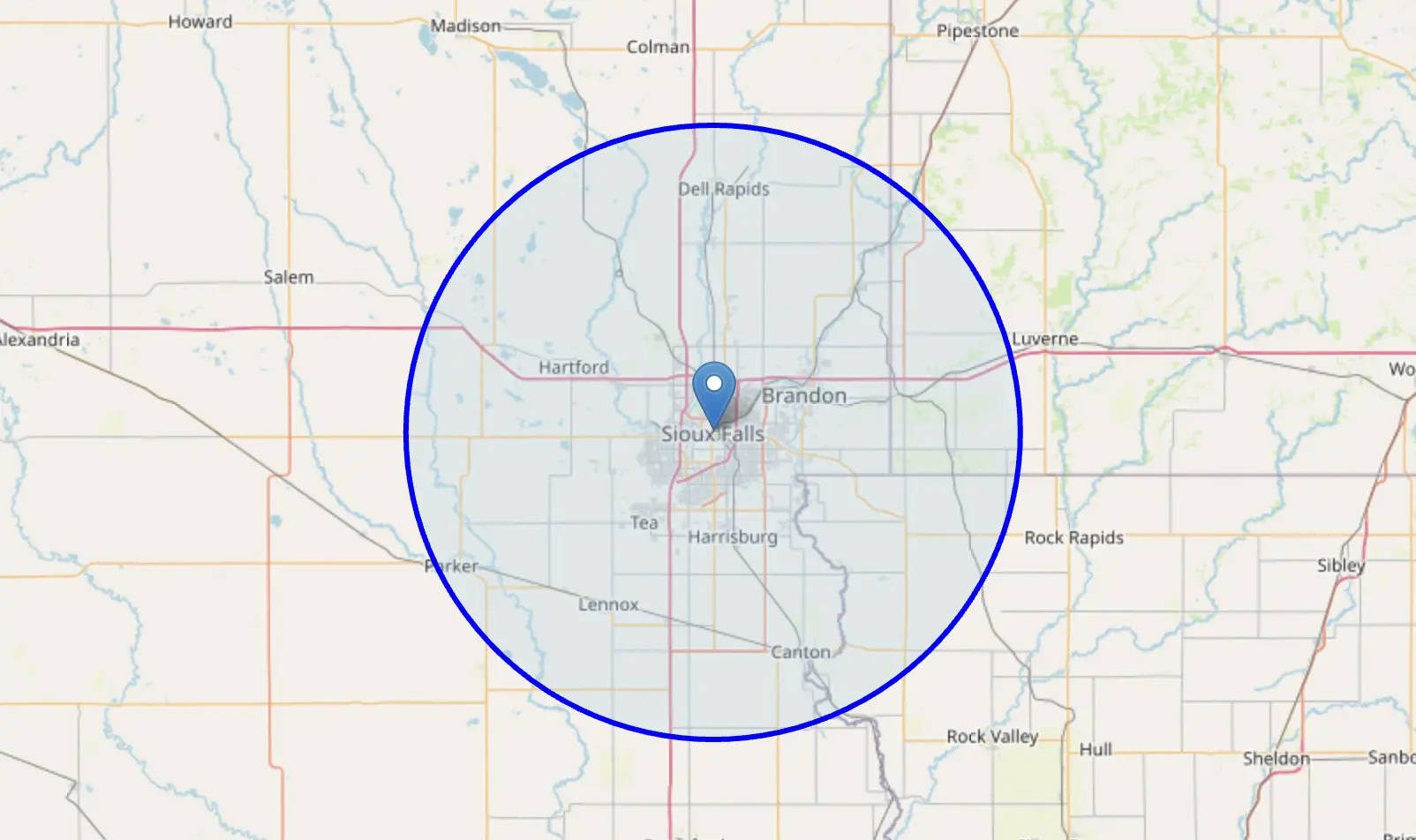
Find local details for each community on our service-area pages.
Frequently Asked Questions
My Harrisburg house was just built — can it really have a radon problem?
Yes. Radon comes from the soil, not the house's age, and Lincoln County is EPA Zone 1 — the highest-potential category. Tight new construction can actually hold more of the gas than a drafty old place. A test settles it either way.
How do I know if my builder installed a rough-in?
Look for a capped vertical PVC pipe in the mechanical room, often labeled RADON, running up through the house to the roof. Some Harrisburg builders include one, some don't. It varies by builder and year, so check rather than assume.
Is Harrisburg inside the normal service area?
Comfortably. Harrisburg sits just south of Sioux Falls, about ten minutes from the city's south side on Highway 11 or Cliff Avenue. Estimates, installs, and retests schedule here routinely.